


Suttons Bay Pressure Washing: Restoring Historic Wood & Composite Decks Safely
Coastal weather around the Leelanau Peninsula makes deck care different. Morning harbor fog, wind-driven spray off Grand Traverse Bay, and oak tannins can stain boards fast. If your porch or lakefront deck needs help, our Suttons Bay pressure washing approach uses a controlled soft wash to clean and protect the grain. Learn how restores delicate cedar and composite surfaces the right way with a careful pressure washing service that relies on detergent chemistry, not brute force.
Why Soft Washing Protects Suttons Bay’s Wood And Composite Decks
Historic porches in downtown Suttons Bay and modern Trex-style decks on the bluffs face the same issue: moisture hangs in the air. A true soft wash pairs low pressure with targeted detergents so the solution lifts organics before a gentle rinse. That means no raised fibers on cedar, no etched streaks on composite, and no water forced into joints or fastener holes.
Never treat cedar or composite with high-pressure blasting. It scars the surface, opens pores, and locks in stains. A measured soft wash keeps the structure intact while bringing back the deck’s natural color and traction.
Local Moisture Realities On The Leelanau Peninsula
From early spring to late fall, Suttons Bay wakes up to fog rolling across the harbor. That wet film sits on horizontal boards longer than on siding. Add shaded lots along M-22 and lakeside breezes that push mist under railings, and you get perfect conditions for algae, mildew, and slippery treads.
- Morning fog and cool nights slow drying time on deck surfaces.
- Bay winds drive salt-free but mineral-laced spray that feeds organic growth.
- Native oaks drop tannin-rich leaves that leave brown tea-like stains on boards.
The answer is not more pressure. It is the right detergent mix with time to work, followed by a low-pressure rinse that leaves fibers calm and color even.
The Risks Of High Pressure On Cedar And Composite
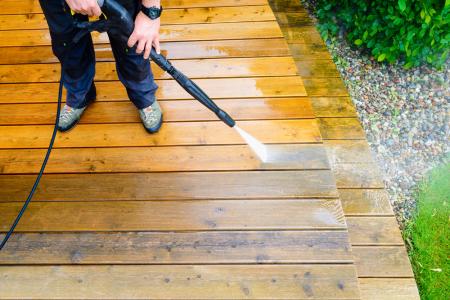
Traditional blasting can shred soft cedar, lift winter-split checks, and create lap marks that never blend out. On composite, too much PSI can burnish the cap, make swirl marks, or expose filler that looks chalky in the sun. High pressure trades short-term brightness for long-term damage. That is why uses calibrated flow, wide tips, and chemistry chosen for coastal decks.
If you want a deeper dive on method safety, this related read explains it well: soft wash vs. pressure wash. It shows why dwell time and detergents beat PSI for sensitive materials across Northern Michigan.
Low-Pressure Wood Restoration For Historic Porches And Decks
Many Suttons Bay homes feature older cedar steps, screened porches, or boathouse landings. Our low-pressure wood restoration focuses on cleaning, not abrasion. We apply a dedicated deck detergent that targets algae film and gray weathering, then rinse with controlled flow to keep the grain flat. This preserves the wood’s character and prepares it for your next finish, without scarring.
For composite decks near water or under canopy, our team uses a detergent package tuned for polymer caps. It lifts organics and sunscreen scuffs without dulling the surface. Again, the goal is a safe, even clean that looks good from rail to rail.
Smart Solutions For Tannin Stains And Harbor Fog Film
Those brown streaks under rail posts and along seams are tannins from oak leaves and acorns. They don’t respond to pressure, and scrubbing can drive the stain deeper. Our soft wash includes a tannin-fighting rinse that releases the discoloration so it can be carried away at low PSI. More pressure will not fix a chemistry problem. The right solution and gentle flow will.
Local insight: decks under big oaks near the harbor pick up tannins fastest right after fall rains. Booking a soft wash shortly after leaf drop helps prevent set-in stains and slippery film before freeze-thaw cycles make them harder to remove.